Why EV charging investment looks different today
- Thought leadership
- 6 Minute Read
- Last updated 29/06/2026


EV charging has moved beyond the early push to build as quickly as possible and into a phase where performance really matters. What investors and operators now care about is whether sites are being used, whether they are reliable, and whether they generate consistent returns over time. The focus is tightening around fewer, stronger locations, better integration with retail and payments, and models that go beyond simply selling electricity.
Key Insights
Investment is shifting from rapid expansion to utilization, site performance, and long-term returns
Charging demand is uneven, which makes location and real-world usage far more important than network size alone
Reliability and payment experience are now expected, and any friction quickly leads to customer drop-off.
The biggest opportunity sits around the charging moment, connecting it with retail, data, loyalty, and broader energy systems
Don't have time to read more now? Sign up to our newsletter to get the latest insights directly in your inbox.
The EV charging industry is settling into reality
Not that long ago, EV charging felt like a race that nobody wanted to lose. The assumption was simple enough: build quickly, claim locations, and as adoption picks up everything else will fall into place. It was a mindset driven by momentum, and to a degree it worked because it got the infrastructure off the ground.
What is happening now feels less like a continuation of that and more like a change in pace. The networks are there, the growth is visible, and the attention has turned to what happens next. Instead of asking how many chargers are being deployed, the conversation has shifted to how well those sites perform. The real question is no longer whether infrastructure can be built, but whether it can consistently deliver strong utilisation, reliability, and long-term returns.
The reality is that growth and performance do not always move in the same direction, and that gap is where a lot of the current thinking is sitting.
Demand in EV is there, just not in the same way everywhere
There is no doubt that EV usage is growing, but the way that translates into charging behavior is more uneven than many expected at the start. A substantial proportion of drivers rely on home charging simply because it is convenient and predictable. Others charge at work or in places where their car is already parked for a longer period.
-
What that leaves is a more nuanced set of moments where public charging plays a role, often tied to journeys, errands, or time spent somewhere else.
That subtle difference changes how operators must think about their sites because it is no longer enough to pick a busy location and assume usage will follow.
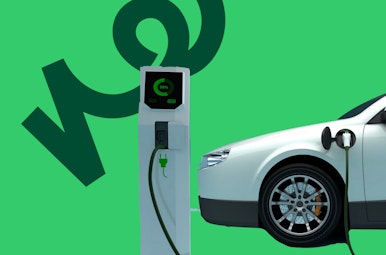

It comes down to whether charging fits naturally into what someone is already doing, rather than feeling like an extra task they need to plan for. Once that becomes clear, the idea of spreading chargers as widely as possible starts to lose its appeal. Precision becomes more valuable than coverage.
Why fewer sites are starting to matter more
This is where the shift toward fewer, stronger sites begins to make sense. Operators are starting to focus more attention on the locations that can consistently attract drivers, whether that is because of the surrounding retail, the nature of the journey, or simply how easy it is to access and use.
The financial side of that decision is unforgiving.
“Utilization swings of just a few percentage points can have a disproportionate impact on your bottom line.”
Chris Berry, Partner, Kearney
When utilization is low to begin with, even a minor change can be the difference between a site that works and one that does not. That is pushing a different kind of discipline into the market, one where expansion alone is no longer enough of a signal for success.
It also explains why consolidation is starting to feel more visible. Networks are being refined, weaker sites are being reconsidered, and there is a growing emphasis on getting the fundamentals right rather than simply adding more.
The EV charging experience still decides everything
For all the discussion around strategy and investment, the experience on the ground still carries the most weight. Charging must feel reliable and predictable in a way that removes any hesitation, otherwise people will simply choose a different option.
“If it doesn’t work, you’re not going back. You just go somewhere else.”
Ghermaine Henry, Head of Fuel & Unattended Payments EMEA, Aevi
That expectation is shaped by how easy other everyday transactions have become. Tapping a card, starting a session, trusting that it will complete without interruption, none of this is seen as a bonus anymore, it is simply expected.
The challenge is that a charging session depends on several moving parts all working at the same time, from hardware to software to payment systems, and when something breaks in that chain, it is immediately visible. That moment of friction is often enough to lose the customer entirely, which is why reliability is becoming less of a differentiator and more of a baseline requirement across the board.
EV Charging is becoming part of something bigger
Once that expectation is met, the focus naturally moves to what surrounds the charge itself. This is where EV charging starts to feel less like a standalone activity and more like something that fits into a wider routine.
Drivers are already adapting their behavior in small but noticeable ways. Charging while shopping, stopping for food, or building it into a longer journey rather than treating it as a separate errand. The time spent waiting is no longer just a delay, it becomes an opportunity.
That shift is subtle, but it changes where the value sits. It moves beyond the electricity being delivered and into everything that can happen alongside it.
“Can you get someone to come in, get a coffee, and spend while they are waiting for their car to charge?”
Chris Berry, Partner, Kearney
For sites that can support that kind of behavior, the potential extends far beyond the charging session itself. It brings in retail, services, and experiences that make the stop more meaningful and more commercially viable at the same time.
Where investment is starting to concentrate
When you step back, the common thread running through all of this is connection. Charging is no longer just a single transaction, it links into payments, into retail, into pricing, and increasingly into how energy is managed and distributed.
That is where investment is starting to tighten. Not just in infrastructure, but in the systems that bring those different elements together.
That perspective pulls everything back into focus. The infrastructure matters, the strategy matters, but the outcome still depends on whether the end experience is simple, reliable, and worth repeating.
What the smart operators are doing differently
-
From the outside, it might still look like a story about growth, but underneath that, the priorities have shifted quite clearly.
The strongest attention is going toward operators who understand how to make individual sites work, how to fit charging into something people already want to do,


and how to connect the different pieces behind the scenes so the whole thing holds together.
It is a more grounded way of looking at the market, but also a more sustainable one.
Because in the end, the networks that last will not be the ones that grew the fastest, but the ones that learned how to make each charge count.
Turning EV strategy into reality
All of this sounds straightforward in theory, but it becomes far more complex once you are trying to make it work in practice. Connecting charging, payments, and customer experience in a way that feels seamless is where most operators start to feel the friction.
The question most teams are now dealing with is not whether EV charging will be part of their future, but how to structure it in a way that performs, scales, and integrates properly with everything else they are already running.
-
If you are looking at how to make your charging experience more reliable, reduce friction at the point of payment, or better connect charging into your wider forecourt or retail offer, it is worth having that conversation early rather than trying to fix it later.
At Aevi, this is exactly where we support operators, bringing together payments, orchestration, and the wider customer
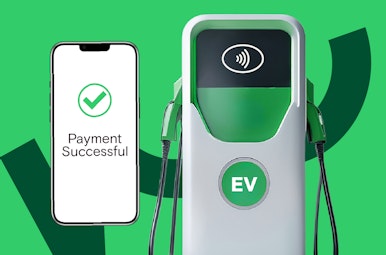

journey so everything works as one connected experience rather than a set of disconnected systems.
If you want to explore what that could look like for your business, get in touch with the team, and we can talk through where you are now and where you want to get to.
Interested in reading more around this subject? Check out our other articles…