Payment gateways vs payment processors - and how to avoid lock-in
- Thought leadership
- 5 Minute Read
- Last updated 06/08/2026


A payment gateway and a payment processor do different jobs in the same transaction. Problems start when the gateway is treated as the whole payments strategy - the point at which teams can lose control over routing and how checkout works. That's where orchestration helps keep the stack adaptable.
Key Insights
-
Processors take over further down the stack. While the gateway sits close to the checkout experience, the processor supports authorization, settlement and communication between banks.
-
Simple gateway setups can become restrictive over time. One integration may work at first, but it can later limit routing, data access, provider choice and checkout flexibility.
-
In-person gateways sit close to the product experience. For ISVs in retail, hospitality and services, gateway choices can affect terminals, SoftPOS, kiosks and the way customers actually pay.
-
Orchestration helps keep options open. A vendor-agnostic payment layer lets gateways do their job while giving teams more control over routing, visibility and future payment experiences.
Don't have time to read more now? Sign up to our newsletter to get the latest insights directly in your inbox.
Ask ten people in payments what a gateway does and you'll get ten slightly different answers…
…Some will describe what a payment processor does, some will conflate the two entirely, and a few will start talking about orchestration before the question's been properly answered.
It's not surprising - the terminology has always been a little unclear. Most merchants and ISVs know they need a payment gateway, but fewer are clear on where the gateway ends and the wider payments setup begins. And fewer still have stopped to ask the question this article is really about: whether their gateway has unintentionally locked them in - to certain acquirers, certain payment methods, and a checkout experience they no longer fully control.
We won't redefine a gateway from scratch here - for a much more detailed explanation of what a payment gateway is and how it works, read our guide, What is a payment gateway? This article focuses on where the processor takes over, why gateway decisions are so often the ones that create lock-in, and how to keep your options open.
Payment processor vs payment gateway: what's the difference?
These two terms cause more confusion than almost anything else in payments. Here's the difference between a payment gateway and a payment processor:
Main Criteria
Main role
Where it sits
What it handles
Strategic risk
Payment gateway
Captures and secures payment details at checkout
Close to the customer interaction
Encryption, tokenization, checkout connection
Often the decision that locks in the rest of the stack
Payment processor
Moves the transaction through authorization and settlement
Behind the scenes
Bank communication, authorization, settlement
Usually inherited from the gateway choice, rather than made independently
A payment gateway starts the transaction conversation; a payment processor helps complete it.
Most payment setups need both, and neither is inherently more important - but they do different things, and understanding where each one fits makes it easier to manage and scale your payments infrastructure.
The payment processor vs payment gateway question isn't really about which is better, it's about understanding which part of the payment flow you're working with and how that choice affects the experience you're building.
Why your gateway shouldn't become your whole payments strategy
A payment gateway should make the payment flow easier to manage. The problem starts when the gateway expands to control more of the stack than it should - and in all-in-one setups, that happens more often than vendors tend to advertise.
-
When a gateway is tightly bundled with other parts of the payment stack, the initial simplicity is real.
One integration, one relationship, one dashboard - for early-stage businesses or straightforward setups, that's fine.


But as payment volumes grow, markets expand, product requirements become more complex, and as customers expect more at checkout, those limitations start to surface.
- Routing becomes fixed: If the gateway is limited to certain acquirers or processors, merchants have limited ability to optimize acceptance rates, add resilience, or negotiate on cost. The gateway's preferred partners become your partners, whether or not they're the right fit.
- Data gets siloed: When transaction reporting sits within a single provider's environment, getting a complete view across channels, markets, and providers can become more difficult. That can make reconciliation more time-consuming and reduce the insight available to teams managing performance.
- Adapting to change takes longer: Expanding into a new market, adding local payment methods, or moving to a different acquirer can become a significant project rather than a quick configuration change. The gateway's flexibility can determine how quickly your product can respond.
- The checkout experience narrows: For ISVs especially, this is the version of lock-in that hurts most. When the gateway limits how checkout works, product teams have fewer options to support different payment methods, less control over the flow, and less ability to tailor the experience to their customers.
In physical commerce, lock-in shows up in the hardware
-
For in-person payments, a gateway decision affects much more than the checkout experience. It can influence which devices you can support, how easily you can adapt your terminal estate, and whether new approaches like SoftPOS can be introduced without major changes.
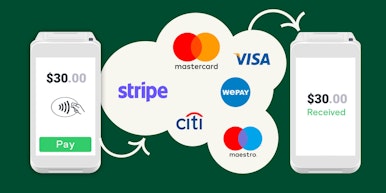

It also affects unattended and self-service environments, including kiosks, vending and self-checkout. For ISVs, it can dictate how easily payment experiences can be deployed across large numbers of locations.
Online, switching gateways usually means updating an integration, but in physical commerce the impact can reach across the devices, locations, and payment experiences connected to that setup. That’s why gateway decisions need to be considered as part of the overall payment architecture, not just the transaction flow.
The gateway itself isn't the problem, the risk is treating it as if it solves every payments problem on its own.
Where orchestration fits in
Payment orchestration doesn't replace the gateway, it gives merchants and ISVs a control layer that sits around gateways, processors, acquirers, and payment methods - and keeps the relationships between them flexible.
A vendor-agnostic orchestration platform means the gateway can do what it's good at: capturing and securing payments, connecting the checkout to the wider payment flow. Routing, provider choice, and visibility sit with you instead - and that's where the practical difference shows:

Switch providers without rebuilding. Change gateways, processors, or acquirers without tearing up your checkout or starting integrations from scratch.

Add new payment methods faster. New methods become a configuration change, not a development project.

Avoid vendor dependency. No single provider's roadmap, pricing, or partner list gets to dictate yours.

Scale across markets. Expand into new regions with local acquirers and local payment methods, on the same stack.
The gateway becomes one component in a stack that merchants and ISVs control - rather than the factor that limits how their payments setup can adapt.
What to look for in a payment gateway setup
When choosing a payment gateway, or reviewing your current setup, the questions worth asking are these…
-
- Can you connect to more than one acquirer or processor?
- Do you have access to transaction data in a format you can actually use?
- Can new payment methods be added without rebuilding the checkout?
- Does the setup work consistently across online and in-person channels?


- Does your product team retain control over the customer experience?
If the answer to several of those is no, it's worth asking whether the gateway has grown beyond its job - and whether orchestration could change that.
Aevi helps ISVs connect gateways, processors, acquirers, devices, and payment experiences through a vendor-agnostic orchestration layer - built for in-person and omnichannel payments, so the way your customers pay in the real world is never limited by a single provider.
Get in touch with Aevi to explore how payment orchestration can give your team more control over your payments infrastructure.
Interested in reading more around this subject? Here are some useful articles…