Alternative payment methods can improve conversion, loyalty and cost-to-serve, but only when they are matched to the right checkout problem. For PSPs, ISVs and merchants, orchestration makes it easier to support the right payment methods across sectors without adding unnecessary complexity.
Key Insights
-
What are alternative payment methods? They’re payment options outside traditional cards and cash - but their real value depends on the checkout problem they solve.
-
APMs are most useful when they support conversion, loyalty or cost-to-serve, rather than simply adding more logos to the payment screen.
-
Contactless payments, wallets, A2A, BNPL and local schemes all play different roles depending on the sector and customer journey.
-
Orchestration helps PSPs, ISVs and merchants support the right payment methods without adding unnecessary complexity to the stack.
Don't have time to read more now? Sign up to our newsletter to get the latest insights directly in your inbox.
It starts with the wrong tool at the wrong moment
A Swedish traveller checks into a hotel in Amsterdam, taps their phone to pay the room deposit using Swish, and nothing happens. The checkout setup doesn’t support it.
They dig out a card they rarely use, insert it, wait for authorization, and eventually get to their room. The payment completed, but the experience has made the customer work harder at the point where the transaction should feel easiest.
That may not lose the booking today, but it can damage trust and make the guest less likely to choose the same brand next time.
This is what a payment strategy looks like when it’s assembled by accident rather than by design. Payment methods accumulate over time, terminal estates grow market by market, and the question of which tool is right for which customer, at which moment, never quite gets asked.
The result is a payment screen with plenty of logos on it, and plenty of gaps behind them.
Alternative payment methods (APMs) can improve conversion and help businesses meet local payment preferences, but there’s a huge difference between expanding payment choice and solving a customer problem.
The problem is that "add more APMs" and "add the right APMs" can look identical from the outside… right up until the moment they don't.
The three jobs APMs actually do
So firstly, what exactly are alternative payment methods?
-
They’re payment options outside traditional cards and cash, from digital wallets and account-to-account (A2A) payments to buy now, pay later and local payment schemes.
Most conversations about alternative payment methods end up at “offer what your customers prefer.” Which isn’t exactly wrong, but it isn't exactly strategy, rather a description of the outcome you're hoping for without a clear route to get there.
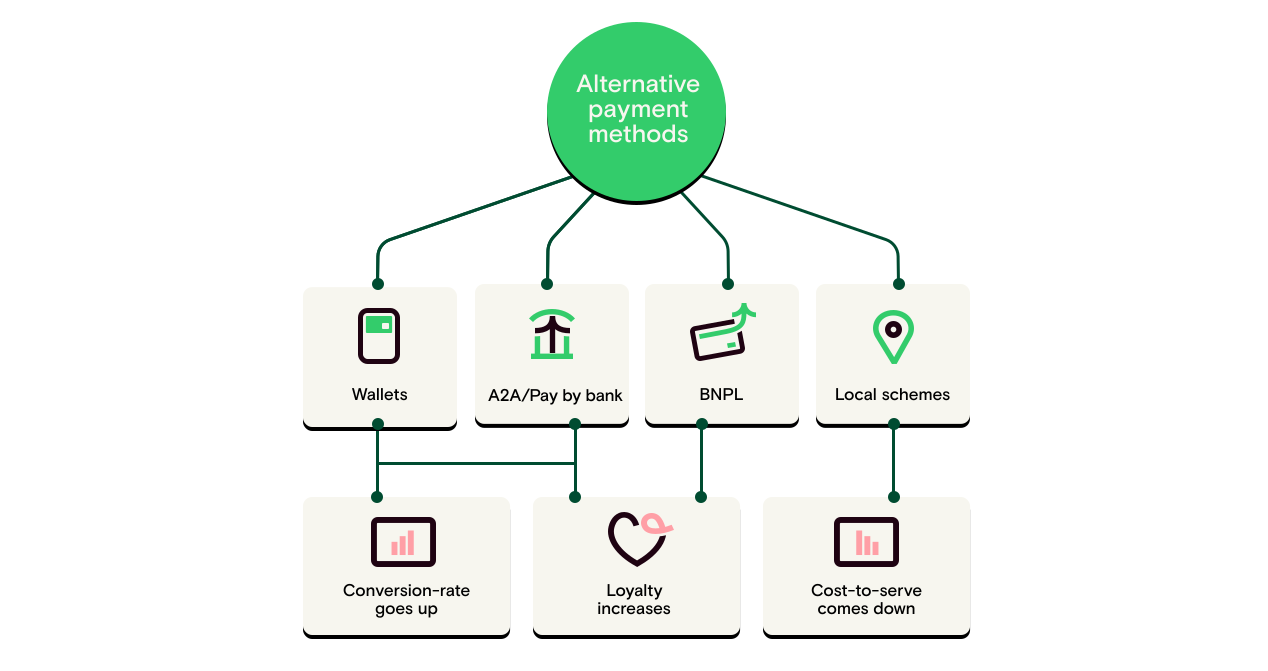
A more useful approach is to decide which of three jobs an APM is actually doing at that point in the journey, and only use it when it’s the right tool for one of those jobs.
1. Conversion
Some payment methods exist for one primary purpose: stopping customers from dropping off at the point of payment. This shows up most clearly in fast, low-friction environments where the customer is in a hurry or paying on a small screen.
Contactless payments, from cards to digital wallets, are now the default expectation across much of Europe. Wallet usage is growing at around 20% per year globally, and in places where tap-to-pay isn't supported, the issue isn’t just a slower checkout experience but a step the customer didn't expect and didn't budget patience for.
You can learn more in our article on what contactless payment technology is and its role in modern payment experiences.
Buy now, pay later (BNPL) does a different version of the same job. It tends to have the most impact at higher basket values, where splitting the cost into instalments can be the difference between completing a purchase and postponing it. The driver here is reducing perceived risk at the point of decision.
Account-to-account or pay-by-bank can also reduce drop-off in repeat or app-based journeys, where cards expire or fail authorization. The failure rate on stored card credentials is a real problem for loyalty-integrated and subscription flows - A2A sidesteps some of it because it's a better tool for that specific job.
A2A doesn’t fix every payment scenario, but in those cases it removes a predictable point of failure rather than adding a new option for its own sake.
2. Loyalty
This is where APMs become part of the relationship with the customer.
-
Wallets and A2A linked to loyalty platforms allow identification, payment, and reward redemption to happen in a single tap.
In fast-moving environments such as quick-service retail or fuel forecourts with high repeat traffic, that removes friction across what would otherwise be several separate steps.
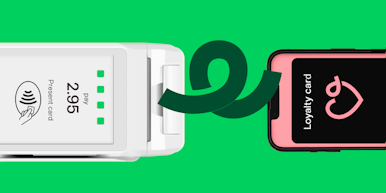

No loyalty card to find and scan, no app to open, just a single interaction at the point of payment - with operators gaining access to richer data on purchasing behavior in the process.
Local and regional APMs play a slightly different role. Accepting a domestic scheme or a widely used local wallet signals familiarity in the markets where those methods are part of everyday life. In hospitality and tourism-heavy environments, that familiarity carries weight and tells customers the experience has been designed with their expectations in mind.
For our Swedish traveller, being able to use Swish in a foreign hotel creates a payment experience that matches what feels normal at home. When that familiarity is missing, it stands out more than the price or the product.
BNPL providers also bring their own merchant discovery ecosystems. For fashion and home goods retailers, being present in a BNPL provider's storefront can direct customers who would never have found them otherwise - making it a loyalty and acquisition tool as much as a payment one.
3. Cost-to-serve
“APMs have a reputation for higher fees.” That's sometimes true, but looking only at the transaction fee misses the full picture.
A2A payments bypass card networks entirely, which can lower acceptance costs and significantly reduce chargeback exposure within the right contexts. Unattended environments, like fuel forecourts and retail, operate at high volume with tight margins, so steering the right transactions to cheaper rails without disrupting the customer experience can have a real impact on overall performance.
The trade-off is that savings on transaction costs can be lost to complexity elsewhere in the stack - which brings us to the part of the APM story that often gets overlooked.
The cost of adding more tools
Every new APM looks clean on a payment screen. The complexity only shows up once it sits alongside everything else in the stack.
One provider settles quickly, another doesn’t, fee treatment changes from APM to APM, and reporting comes back in formats that need manual reconciliation before anyone can make proper sense of it. Side by side, the differences are hard to ignore:
Payment aspect
Settlement timing
Fee structures
Reporting formats
Disputes
Certification
Provider differences
Varies across APMs
Calculated differently per provider
Inconsistent schemas
Separate processes per APM
Market and device dependent
Impact on day‑to‑day operations
Delayed reconciliation and weaker cash visibility
Fragmented margin reporting
Ongoing mapping and transformation work
Fragmented operational handling
Slower, duplicated rollout effort
The transaction fee is only the visible part - the real cost shows up in the engineering effort, the certification overhead, and the reconciliation headache that follows each new method through its entire lifecycle.
This is exactly where an in person payment orchestration platform like Aevi’s demonstrates its value: it gives PSPs, ISVs and merchants a vendor-agnostic layer for managing APMs across mixed device estates, normalising transaction and settlement data while allowing new methods to be added without having to rework integrations one terminal at a time.
Orchestration is how you keep expanding your toolkit without day-to-day operations becoming impossible to navigate.
The right tool by sector
The right APM depends on what each sector needs most from checkout - whether that’s speed, loyalty, lower cost or customer familiarity.
Retail
For everyday grocery and convenience, contactless card and wallet acceptance is a baseline expectation, and any friction at checkout shows up immediately in the queue behind it.
In fashion and electronics, where purchase decisions carry more weight, BNPL reduces the perceived risk rather than speeding up the transaction itself.
-
Omnichannel retail is where things get more demanding. The same customer might buy online, return in-store, or collect via click-and-collect, and expect the payment experience to behave consistently across all of it.
That consistency is where orchestration starts to matter most - keeping payment methods aligned across very different journey types.


Hospitality
The right tool in hospitality is one that disappears into the service experience.
In hotels, wallets and A2A payments fit naturally into the full journey, from pre-authorization through checkout, all without forcing a stop at the front desk. It keeps the focus on the stay, not the transaction.
-
In restaurants, cafes, pubs, and bars, the expectation is even more demanding. Payment happens at the table or the bar, often mid-flow, so contactless and wallets need to be instant and reliable.
Anything slower starts to hold up service and slows customer turnover.
For cross-border guests, local APMs do something subtler: they signal that the

experience was built around how people actually pay at home - rather than forcing them into unfamiliar payment flows.
Fuel and convenience
In fuel retail, the right payment method is usually the one that keeps things moving. At volume, that also means the one that keeps costs under control.
-
Contactless cards and wallets do most of the heavy lifting at the forecourt, reducing friction at the pump and in unattended environments where speed is non-negotiable. In those same settings, A2A and local schemes often come into play more directly - helping reduce scheme fees and limit fraud exposure, particularly where vehicle recognition or in-car payment systems are part of the experience.
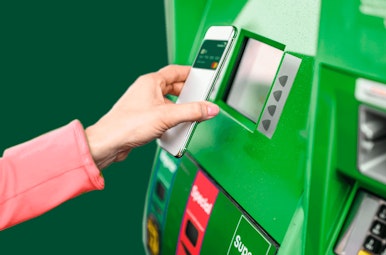

App-based wallets linked to loyalty programs operate at a different point in the journey. They’re less about the moment of payment and more about what follows, encouraging repeat visits and higher-value in-store spend once the forecourt interaction is complete.
We go into the complexity behind forecourts and payment orchestration in more detail here: Fragmented Forecourts - payments in fuel retail.
Mobility
In shared transport, ride-hailing and transit, APMs are part of the infrastructure holding the experience together. Stored credentials, wallets, and A2A allow journeys where the customer never interacts with a terminal.
Most of the critical work happens at onboarding, when a payment credential is first attached to an account. The wrong tool at that moment, and you introduce drop-off that carries through the entire customer journey - with very little chance of recovery later on.
-
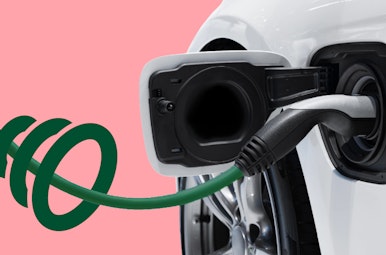
EV charging follows a similar pattern. App-based A2A and wallet flows have become the default expectation for a driver who's going to be standing at a charger for twenty minutes - and who will remember exactly how the payment experience felt while they were waiting.
From the driver's perspective, a failed payment and a faulty charger look exactly the same.

Deciding which APMs to prioritize
The question PSPs and ISVs usually arrive at isn't "should we support more APMs" - it's "which ones, and in what order."
If your merchants…
Operate in high-volume, low-margin environments - fuel, convenience, transit
See high basket values or considered purchases - fashion, electronics, home goods
Have strong repeat behavior and an existing loyalty proposition - QSR, forecourts, micromobility
Serve international or cross-border customers - hospitality, travel retail, urban mobility
Then prioritize…
A2A and local schemes
BNPL alongside wallets
App-integrated wallets and local schemes
Local APMs
The payoff of which will be…
Lower scheme fees and reduced fraud exposure, alongside loyalty integration that supports repeat visits. The cost-to-serve case is as strong as the conversion one.
Wallets handle the speed expectation; BNPL handles the "I'll think about it" moment. Together they cover the two most common reasons a higher-value transaction doesn't complete.
Collapses identification, payment, and reward redemption into one interaction. This is where APMs stop being a checkout feature and start being part of the product.
Declines and abandoned transactions in these environments often don't look like payment failures from the outside. They just look like a customer who didn't come back.
“The starting point isn’t adding more payment methods, it’s solving the right problem first. Once that’s clear, orchestration gives you the flexibility to scale across providers, devices, and markets without rebuilding your stack every time.”
Victor Padee, CRO, Aevi
Whichever sector you're starting from, the principle is the same: pick the APM that solves the most pressing job first, prove it works, then scale through Aevi’s orchestration platform - without rebuilding the stack every time a new payment method is added.
Ready to add the right payment methods, not just more of them? Contact us to see how Aevi helps PSPs, ISVs and merchants support APMs without adding complexity to the stack.
Interested in reading more around this subject? Here are some useful articles…