Your first payments setup should help you launch quickly, but it should not make every later decision harder. At scale, the strongest in-person payment setups usually combine SoftPOS, terminals and orchestration, so businesses can keep speed early on while gaining control as they grow.
Key Insights
-
Early payment setups are usually chosen for speed, but the same setup can become restrictive once transaction volumes, markets and operational complexity grow.
-
All-in-one PSPs make sense for MVPs and market launches, but can limit routing control, acquirer choice, reporting depth and device flexibility later on.
-
Scale changes who cares about payments. Finance, operations, compliance, procurement and support all start to feel the impact once payments affect margins, onboarding, reconciliation and day-to-day service.
-
SoftPOS, terminals and hybrid models all have a place, but hybrid is often where scaled businesses land because real-world in-person operations rarely fit one device model forever.
-
Orchestration is what makes a hybrid setup manageable, giving businesses a way to control different devices, providers, acquirers and acceptance models without rebuilding the stack every time it needs to change.
Don't have time to read more now? Sign up to our newsletter to get the latest insights directly in your inbox.
Most payments setups start with a simple question…
…which is: how quickly can we get live? At that point, an all-in-one PSP, a single provider, or a quick SoftPOS rollout often feels like the right call. It gets things moving without friction, and that speed matters.
The challenge comes later, when that early setup starts to carry more weight than it was designed for. As transaction volumes grow, new markets open up, and in-person operations become more complex to manage, that early choice can start to feel restrictive rather than enabling.
Most teams don't get the early decision wrong; they just make it for speed, and then feel it later when the setup starts limiting what comes next. This article is about that next part: what changes as you scale, and how to keep your early choices from boxing you in.
Your first payments setup is about speed, your second is about control
Early payments decisions tend to sit with product and tech teams, and they’re usually assessed against a tight set of questions:
- How quickly can we integrate?
- Can we take payments?
- Are we live?
That's a fair benchmark for getting started, but it only measures whether you can go live, not what happens to cost and control once you have.
The second set of decisions looks very different. They’re driven by scale, cost, and a growing list of stakeholders who suddenly have opinions about payments - finance wants better margins, ops wants fewer support tickets, compliance wants to know who's actually accountable for KYB, and procurement starts asking why every new market means another supplier to manage.
Your first setup might do exactly what you need early on, but when it starts to limit what you can do next the trade-offs become much harder to ignore.
The all-in-one PSP reality
All-in-one PSPs earn their keep early on. They bundle acceptance, acquiring, reporting, settlement and support into one contract, which means one integration instead of five - and no need for in-house payments expertise you probably don't have yet. For an MVP, a market launch, or testing a new merchant segment, that simplicity often makes complete sense.
The trade-off shows up later, in the form of things you didn't know you'd want: routing control, the ability to work with different acquirers, deeper reporting, support for regional differences, or greater flexibility over payment devices.
None of it feels urgent at low volume; all of it starts to matter once volume, and the margin attached to it, become visible.
This is where "we'll fix it later" becomes the most expensive sentence in payments. Later, you aren’t simply swapping a line in a config file; you're unwinding contracts, untangling integrations and changing processes that have become part of day-to-day operations.
What changes at scale
At scale the questions change - and so does who's asking them.

Margin starts to take priority over launch speed
At low volume, payment costs are rarely examined in detail. At scale, it's a line item finance will ask about directly.

One provider stops being enough
Multi-acquirer setups become part of how resilience is built, making it easier to adjust pricing and terms rather than staying locked in to earlier decisions.

Regions stop behaving the same way
What works in one market (payment methods, device certifications, acquiring performance, even merchant expectations) doesn't automatically translate to the next. A setup built for one geography can become a constraint the moment you expand.

Payments stop being a product decision
Finance, ops, compliance and support all start caring about the setup, because it now touches reconciliation, onboarding, reporting and day-to-day support work.
The PayFac question
As payment costs become more visible, the idea of owning more of the stack can start to look appealing. Better margins, more control over onboarding, and more influence over which providers sit underneath merchant payments all start to make sense on paper.
But it’s not a simple upgrade. Taking on more of the stack also means taking on more of the work that sits around it - KYB, risk, scheme rules, compliance, onboarding operations and ongoing monitoring. Businesses that move in this direction without planning for that extra complexity often find it surfaces quickly in day-to-day operations, where compliance and risk management become active day-to-day work, rather than something handled elsewhere.
The economics can absolutely be better, but only if you've actually budgeted for what "better" costs operationally, not just commercially.
Hardware and the in-person reality
This is the part that's easy to underestimate, because it's the least visible at pilot stage and it's where in-person payments get genuinely hard.
A pilot works because the environment is controlled: a handful of devices, a handful of sites, and technical support nearby if something goes wrong. Field deployment introduces a very different set of challenges.
What looks good in testing can behave very differently across a live estate. Controlled environments rarely expose the realities that show up once hundreds or thousands of devices are in use: failed units, inconsistent connectivity, staff training gaps, device handling issues and support problems that need resolving while customers are waiting to pay.
That’s when device choice stops being a software-level decision and becomes an operational one. Battery life, connectivity, durability, replacement processes and support all start to matter, because a broken unit at site 400 can affect the checkout, the merchant experience and the support team all at the same time.
Device estate management becomes its own challenge
Large device estates carry costs that don't show up in a pilot budget: return shipping, firmware updates, asset tracking, spare stock and merchant support calls at 8am because a terminal won't connect.
-
Managing a live estate means knowing what is deployed, where it is, who owns it, whether it's working, when it was last updated and what happens when it fails. At small scale that can be handled manually - across hundreds or thousands of locations, it becomes a day-to-day operational burden.
That means clear processes for device swaps, repairs, returns, spare stock,


software updates and getting merchants back online quickly. Without that structure, the device estate starts creating work across support, operations, finance and merchant success.
Each one is small in isolation, but multiplied across hundreds or thousands of sites, it adds up fast.
SoftPOS, terminals or hybrid?
There's genuinely no universal winner here, and picking sides too early is part of the problem. The right answer depends on environment, merchant type, and how the business actually runs day to day.
Model
SoftPOS
Terminals
Hybrid
Where it works best
Mobile teams, pop-up locations, field service and lower-volume use cases.
Higher-volume, fixed checkout environments such as retail, hospitality, fuel and unattended sites.
Businesses with mixed environments, such as fixed stores, mobile teams, temporary sites or different merchant segments.
Why businesses choose it
Fast deployment, lower hardware dependency and flexibility for teams that need to take payments away from a fixed checkout.
Predictable performance, durability and a familiar checkout experience for staff and customers.
Flexibility to use the right acceptance model in the right environment.
What to watch at scale
Device consistency, operating system updates, connectivity, staff training, refunds, receipts and support processes.
Procurement, repairs, replacements, firmware updates, estate visibility and hardware support.
More operational complexity if devices, providers, reporting and support are managed separately.
Where SoftPOS works best
SoftPOS earns its place for mobile teams, pop-up locations, field service operations and lower-volume use cases where speed of deployment and lower hardware dependency matter most. It can be a strong starting point, especially when the priority is getting live without waiting for a full hardware rollout.
At scale, though, SoftPOS becomes more complex to manage. A small rollout can mask problems that only appear later, from supporting a mix of phone models and app versions to managing operating system permissions, software updates and varying levels of staff confidence. Support also becomes harder when teams are trying to diagnose problems on devices they can't directly access.
Those issues can be compounded by connectivity problems, with intermittent signal, Bluetooth pairing problems or communication failures between devices creating recurring support cases when they appear across hundreds of locations.
Where terminals still make sense
Terminals still make sense for higher-volume, fixed checkout environments (retail, hospitality, fuel, unattended sites) where consistency and a familiar customer experience matter. Many merchants continue to use dedicated terminals because they provide a familiar setup for staff and customers, with clear ownership of the hardware and fewer variables to manage.
-
They come with their own operational load: procurement, repairs, swaps, estate visibility. That can mean more to manage upfront compared with SoftPOS, but for many fixed checkout environments the reliability and familiarity of dedicated terminals are still worth it.

Why hybrid often works at scale
Hybrid is often where scaled businesses actually land, because most of them need both: SoftPOS for mobile or temporary use cases, terminals for the main in-person payment points.
-
Between those two models, there are other device options too. MiniPOS-style devices, for example, can give businesses more flexibility than a fixed terminal estate, while still offering more dedicated payment hardware than a standard smartphone.
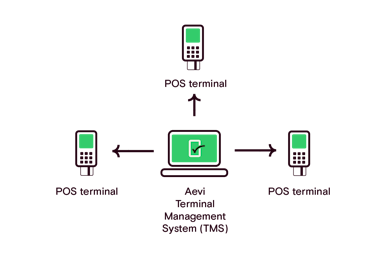
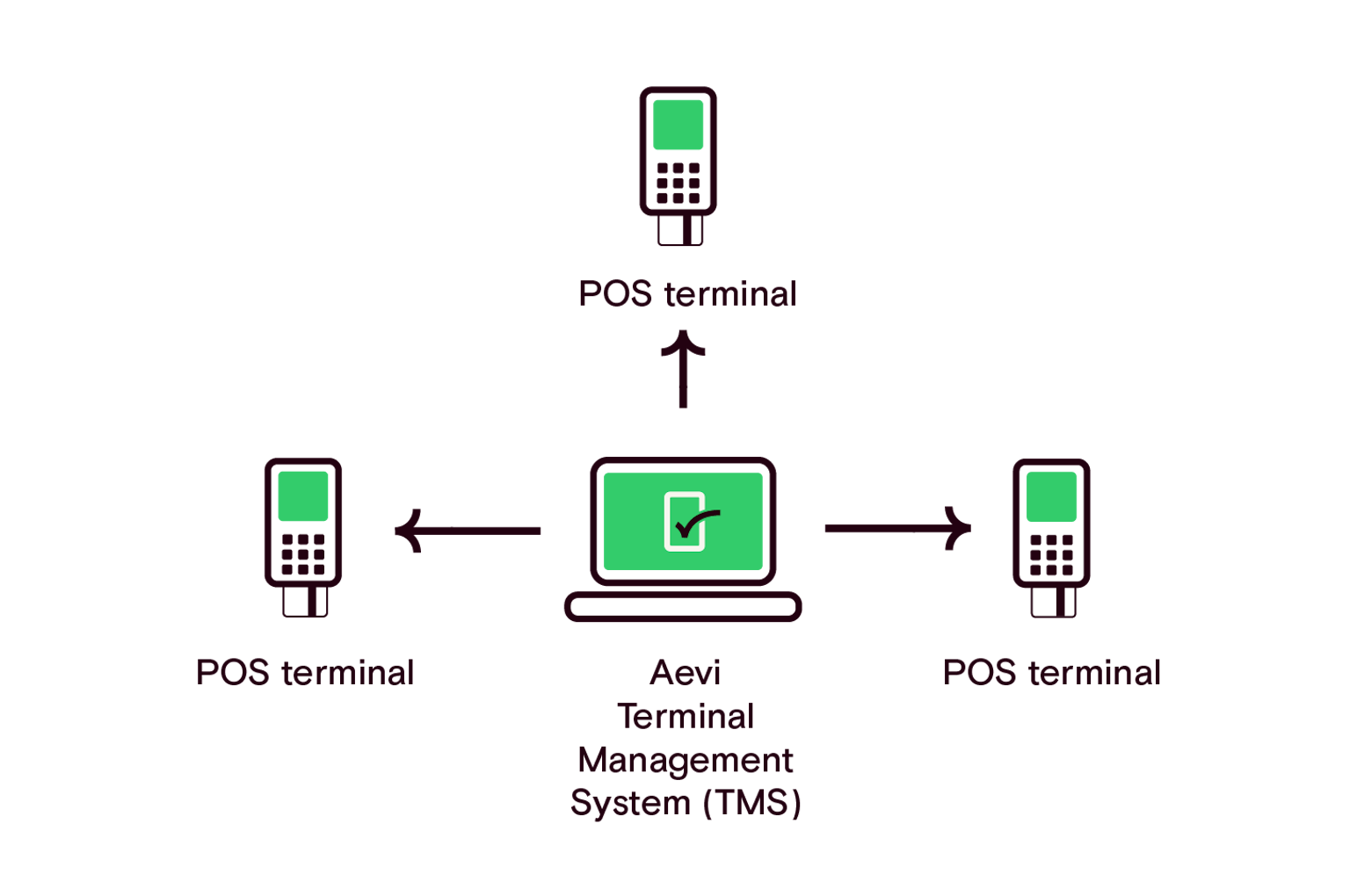
From there, the real work is making sure those different models work together without adding operational complexity. That’s an orchestration challenge, not a hardware one.
Merchant onboarding is where control gets tested
Faster onboarding is a real competitive advantage, and any friction shows up quickly in the experience: manual KYB steps, unclear status updates, and onboarding flows that depend more on a provider’s timelines than your own.
The simplicity you had early on can be hard to preserve once you add more providers, more regions, more control. That's worth paying attention to, because control only matters if it makes life easier for the merchant. The moment it slows onboarding down, it's working against the thing it was supposed to help.
Why "we'll fix it later" is harder than it sounds
Replatforming in payments means working through contracts, rebuilding integrations, migrating merchants, replacing devices, and updating reporting, reconciliation and support processes. All of it has to be explained to merchants who mainly want one thing: for payments to keep working without interruption.
Dependencies tend to build up without much visibility. Contracts, reporting habits and support workflows all end up tied to a provider, often without a clear moment where that decision was made. Moving away from it usually means changing how the business operates, not just what sits in the stack.
Hardware makes that even harder. Replacing or standardizing devices across a live estate involves more than changing the technology - it means planning shipments, swaps, returns, installation, testing, staff guidance and ongoing support across locations that are already trading. A provider or gateway change can be complex, but device changes have to work at the checkout, without disrupting the payment experience.
That's why “we’ll fix it later” is rarely as simple as it sounds. By the time the problem is visible, the setup is usually embedded in live operations: the provider relationship, the reporting process, the support model, and the devices merchants already rely on every day.
Designing for scale without slowing down your MVP
None of this means slowing your launch down - it means being deliberate about where you leave room to move.

Separate the parts of the stack in your thinking.
Acceptance isn’t the same as acquiring, device choice isn’t the same as routing, and onboarding isn’t the same as settlement. Even if one provider covers all of this today, keeping those distinctions clear makes it easier to change one piece later without pulling everything apart.
Keep provider options open from the start.
MVPs still need to move quickly, but leaving room to switch or add providers later makes it easier to scale or expand into new markets.

Plan for hybrid before it becomes urgent.
Even if SoftPOS or terminals are your only use case today, leave space for both. It’s much easier to design that flexibility in early than to retrofit it under pressure later.
So, what actually works at scale?
Honest answer? Operating at scale usually means accepting that no single model will cover every use case forever.
The right approach is to understand where each model fits best and what trade-offs come with each option: where flexibility helps, where reliability matters more, where support burden starts to grow, and where operational control becomes harder to maintain. Those trade-offs are easy to overlook early on, but they become much more visible once payments are running across real locations, real staff and real customer interactions.
Most organizations end up running both SoftPOS for mobile and temporary sites, alongside terminals for fixed checkout points, because operations rarely look the same across every location.
But hybrid only works if it’s manageable. Without a control layer, you’re just adding more providers, more devices, more reporting and more moving parts for teams to deal with, without anything sitting above it to keep things connected as you scale.
This is where orchestration comes in. It gives you a way to manage different acceptance models, acquirers, devices and providers without treating every new requirement like a fresh rebuild. It keeps the setup flexible while stopping scale from turning into a patchwork of disconnected one-off decisions.
Your first payments setup should help you launch, not make every decision after it harder. If you're weighing up SoftPOS, terminals, or a hybrid model, Aevi can help you build an in-person payment setup that gives you speed now and control as you scale.
Get in touch with Aevi to design a stack that doesn’t box you in.
Interested in reading more? Here are some useful articles…