Most payment setups that claim to be vendor agnostic still behave like single-vendor systems, where flexibility looks good initially but breaks down as complexity grows. Real flexibility comes from orchestration, which decouples devices, acquirers, and services so payment estates can scale, adapt, and evolve without rebuilding.
Key Insights
- Single-vendor setups introduce hidden dependencies that only become visible as requirements change.
- Payment estates naturally become multi-vendor over time as they expand across regions and use cases.
- True vendor agnostic architecture lets you change devices, acquirers, or methods without reworking everything else.
- Orchestration creates a control layer that keeps options open and makes change easier to manage.
Don't have time to read more now? Sign up to our newsletter to get the latest insights directly in your inbox.
When simple payment setups start to break down
A single payments provider often looks like the easiest route: one integration,one contract, and a sense of simplicity at the start.
It’s like sticking to one TV channel - it works, it’s familiar, and for a while, it feels like enough.
But as your business grows, simplicity starts to become a constraint. You’re limited by what the provider supports and how fast they move, and expanding into new regions creates its own hurdles.
What looks like a clean, single-vendor setup at the start becomes fragile as requirements change. Introducing a new device or payment method takes time, and bringing in a new vendor often means unplanned workarounds.
The strongest payment architectures are more like Netflix: a full library of providers, devices, services, and payment options sitting ready for you to stream on demand. You can queue the tools you need today, binge new payment methods tomorrow, and build your own payment stack playlist - switching whenever your business changes.
In this article, we’ll explore why many setups that claim to be “vendor agnostic” still behave like a single TV channel, where flexibility sounds great in theory but breaks down in practice, and show what it takes to build an architecture that keeps your options open.
Why “vendor agnostic” often isn’t
Vendor agnostic sounds reassuring on paper, promising flexibility without provider lock-in, but in practice, many setups still act like live TV: reliable, but locked to a strict schedule.
Your “flexible” payment stack might support different devices or acquirers, but underneath, you’re still being tied down by contracts, hardware restrictions, and the certifications each device or service needs to operate.
In reality, most payment estates are already multi-vendor, whether that was the plan or not. Different regions, device types, payment methods, and use cases naturally introduce multiple partners over time.
A truly vendor-agnostic payment setup is designed that way from the start. Devices, acquirers, payment methods, and services operate independently, letting you adjust your setup without the pain (and cost) of rebuilding everything. It’s the difference between being able to choose from what’s currently on TV and having a full library available at any time.
That difference shows up the moment something needs to change. The rest of this comes down to where those hidden dependencies sit, and how they build up over time.
How "flexible" becomes "fixed"
Lock-in in payments doesn’t come with a warning - one moment your stack feels flexible, the next it’s constrained by decisions you made years earlier.
It usually shows up in three places:
Area
Hardware
Certifications
Contracts
What looks flexible at first
One device type, fully integrated and easy to manage
Pre-certified routes speed up initial deployment
One commercial agreement that simplifies pricing and operations
What actually happens over time
Device choices lock you to a single manufacturer or limited catalogue. Adding new form factors slows rollout and limits innovation
Certifications are tied to specific device and acquirer combinations. Adding or switching partners often means going back to square one, with delays, extra cost, and duplicated effort
Revenue share, exclusivity clauses, and volume commitments make it expensive or impractical to introduce new partners or reroute transactions
What a truly agnostic setup allows
Run legacy POS, SmartPOS, and SoftPOS side by side across multiple manufacturers. Pick the right device for each use case without overhauling the estate
Modular certifications that can be reused across devices and acquirers, allowing new partners to be added without rebuilding from scratch
The freedom to add or switch acquirers and partners without penalties, keeping full control over commercial terms
-
For an ISV expanding across markets, these limitations add up fast. Every region brings its own complexities, and that’s how payment estates naturally evolve into multi-vendor environments.
The difference is whether that complexity is visible and controllable, or hidden inside a single provider.

Because, as we’ll now show you, once platform flexibility is constrained, every change becomes more expensive and harder to deliver.
What real flexibility looks like
If that’s how flexibility breaks down, what does a vendor agnostic approach actually look like in practice?
The real measure of a platform is what you can change without ripping everything out:
- Can you add a second acquirer without recertifying from scratch?
- Can you bring in a new device from a different manufacturer without changing your management layer?
- Can you update routing rules once and have them apply across every market?
- Can you pull your data without paying egress fees or depending on a vendor-specific export format?
Modern payment estates are multi-vendor by default, so if the answer to any of these is “not really,” your stack is still stuck on a single TV channel rather than the on-demand multi-vendor streaming library you need.
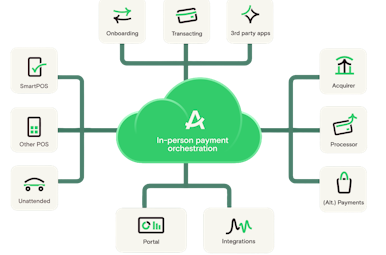
That’s where Aevi’s payment orchestration comes in. Sitting between the front-end acceptance layer and the back-end processing layer, our orchestration platform gives you control over your entire estate on demand without being tied to a single provider. It allows you to make changes when needed, without rebuilding the rest of the estate.
This is what vendor agnostic really looks like: rules that live in your orchestration layer, not in someone else’s platform.
What this looks like in practice
Here’s what a vendor agnostic approach looks like when it’s applied in real payment environments.
Scaling across markets without rebuilding
Supporting different payment providers across markets can quickly become a headache for ISVs, creating fragmented payment estates that can hold back growth. Aevi’s orchestration layer keeps the estate connected from the start, letting a single POS integration manage multiple providers and schemes seamlessly.
Working alongside Aera, Aevi’s orchestration layer enables the same POS integration to connect with multiple local providers across the Nordics, including BankAxept. This lets Aera offer the right acquirers and schemes in each market without rebuilding the application every time requirements change.
Supporting multiple devices through a single control layer
Retail and SMB environments rarely rely on just one device type. Locking into a single hardware roadmap slows new service rollout and limits flexibility.
In partnership with Rabobank, Aevi supports a broad portfolio of terminals from multiple vendors, all managed through a single orchestration layer. New devices and services can be introduced without re-engineering acceptance flows or committing to a single hardware provider.
Growing your payment capabilities without locking in your estate
As banks modernize, they need to adopt new form factors and use cases without limiting future options.
In the case of UniCredit Bank, Aevi’s orchestration platform allows multi-vendor terminal management while adding Android-based devices and SoftPOS. This approach enables the bank to scale into new geographies and use cases while maintaining full flexibility over hardware and service partners.
Across all these examples, the story is the same: your payments library streams smoothly. New features and partners can be added alongside what already exists, allowing the payment environment to evolve without becoming more complex or more constrained over time.
A vendor agnostic checklist
Reviewing your setup or heading into an RFP? Look beyond vendor claims and focus on how your architecture really operates day to day.
Devices
- Can you run multiple device types from different manufacturers side by side?
- Can you introduce new hardware without replacing what’s already in place?
- Who owns the device lifecycle and the merchant relationship?
- What does adding a new device actually involve in terms of cost and timelines?
Acquirers and payment methods
- Can you add or switch acquirers without restarting certification?
- Can you support local payment methods without rebuilding your integration?
- How long does it realistically take to add a new payment method or acquirer in a new market?
Certifications
- Are certifications reusable across your estate, or tied to specific combinations?
- Does adding something new mean repeating work you’ve already done?
- Who owns those certification assets if you decide to switch provider?
Data and control
- Do you have full access to your data, without proprietary restrictions?
- Can changes be made centrally and applied consistently across your estate?
- Can you extract your data in a usable format without relying on a vendor-controlled interface?
Commercial terms
- Are there any penalties or restrictions on adding new partners?
- Does your setup give you flexibility or limit your options over time?
- Are there clauses or commercial structures that discourage multi-vendor setups?
If the answers are conditional or require a follow-up call with the commercial team, you have your answer. Flexibility that only exists on paper is just a fancier form of lock-in. Click the image below for your full vendor-agnostic comparison.

Why have one when you can have them all?
The strongest payment estates are built around a control layer that keeps every partner accountable - and replaceable, if it ever comes to that.
Use this moment to define what vendor agnostic means for your business. Vendor agnostic, by definition, means no obligatory exclusivity, the freedom to choose what works best without asking permission or triggering a six-month certification cycle.
That’s the difference between operating your payment stack like a single TV channel and running a true on-demand streaming platform.
Before you sign the next contract, make sure yours can actually prove it.
If you want to explore what vendor-agnostic orchestration looks like in practice, our team can help. Get in touch with us today to see what you’re missing out on.
Interested in reading more on this topic? Here are some useful articles...