Wearable payment devices have moved well beyond the payment watch, with NFC payment rings, wristbands, keychains, clothing chips and even implants now part of the mix. Underneath, the contactless technology is still familiar. What’s changed is where payment happens, as tap and pay technology moves into the things people already wear.
Key Insights
-
What are contactless payments? Once limited to cards and phones, tap-to-pay now includes rings, watches, clothing and even implants, bringing contactless into everyday life.
-
Wearables show how NFC mobile payments are quietly fading into the background, making payment a natural action rather than a conscious step.
-
Wearables don’t change how payments work - they change where and when payment moments can happen.
-
As payments disappear into wearables, the industry must rethink how trust, visibility, and control are maintained when there’s no obvious "checkout moment."
-
Questions like “Are contactless payments safe?” matter more as payments become less visible - security has to be built in, not bolted on.
-
Wearable payments are a signal of where payments are heading next: frictionless, contextual, and increasingly invisible.
Don't have time to read more now? Sign up to our newsletter to get the latest insights directly in your inbox.
Not long ago, paying meant reaching for your wallet…
…Then it meant reaching for your phone. Now, increasingly, it doesn't mean reaching for anything at all - the payment moment disappears into a ring on your finger, a band on your wrist, or the watch you already wear.
-
The wearable payment market was valued at around $68 billion in 2025 and is estimated to hit over $146 billion in 2030. You don't need to understand the tech to use it, but here's the quick version: most wearable payments still ride the same payment rails underneath - they simply use RFID (radio frequency identification) or NFC (near field communication) as the way to talk to the terminal.
RFID payments use radio waves to pass data between a chip and a reader. RFID wearables, like festival wristbands or contactless keychains, hold your payment credentials in a passive chip powered by the reader itself. No battery, no app, no thinking about it.
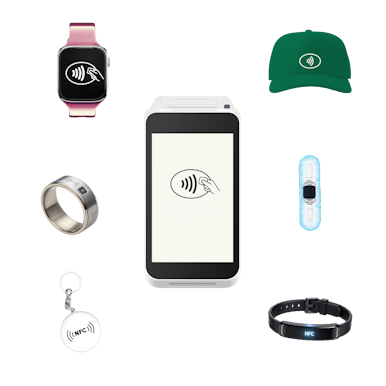

NFC wearable technology is the more advanced cousin, with faster data transfer and a shorter range. It powers most payment rings, smartwatches, and tap-and-pay technology.
Wearable payment devices are turning up in more places than you’d expect, and behind all of them is the same need: a way to accept in‑person payments reliably, regardless of the device a customer chooses to tap.
Here are 10 contactless payment devices worth knowing about right now.
1. Fitbit Versa 4
-
Fitbits remain strong fitness trackers and an established name in wearable payments.
A nice feature of this one is that you can use multiple cards. We also love that there are so many different styles available.
There’s both a watch and a tracker version, all varying in price. Now available at a lower price point than when it first launched, making it one of the more accessible smartwatch payment options.
$199.95.

2. DressCode Cashcuff Shirts
Cashcuff shirts are tailored shirts for men and women with an NFC payment chip built into the cuff, so payments can be made with a simple tap on a terminal without reaching for your phone or wallet. The chip can be removed, so the shirt can be washed and the same payment setup moved between different garments.
The range comes in various designs, while the chip runs on the MuchBetter payment platform - allowing users to manage funding and freeze the chip instantly if needed. Coverage throughout Europe, with plans for global expansion.
$215.
3. Pixel Watch 4
-
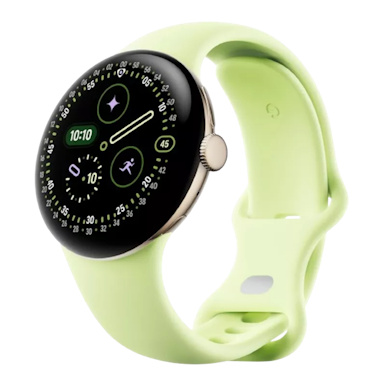
Google’s latest Pixel Watch is one of the strongest wearable payment devices in the Android space. Google Wallet is built in, so tap-to-pay works anywhere contactless is accepted, with no extra setup or workarounds.
It’s a capable all-rounder beyond payments too, with solid battery life, a brighter display, and added safety features like emergency support. It’s a solid option for Android users who want payments built into something they’re already wearing.
From $349.99, LTE starts from $449.99.

4. CNICK smart payment rings
-
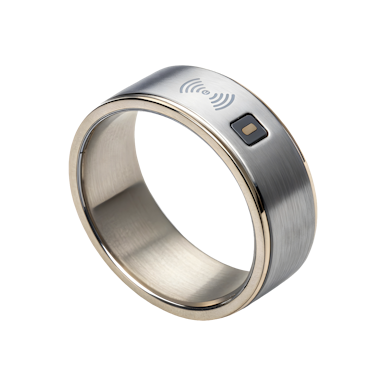
CNICK makes a minimalist ceramic payment ring that works like a contactless bank card.
It’s powered through Visa and Mastercard credentials via Fidesmo Pay, so you can tap to pay anywhere standard contactless is accepted.
There’s no charging, no pairing, and nothing to open on your phone - it just works when your linked card is active. It comes in a range of colors and finishes, with some versions also doubling as a Tesla key for supported models.
From $160 to $2000 depending on the finish.

5. Keychains
-
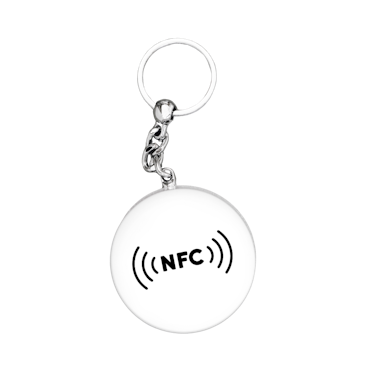
LAKS makes keychains with an NFC payment chip built in, so your keys double as a contactless card.
You link the fob once via the LAKS Pay app to a supported Visa or Mastercard, then tap to pay anywhere that accepts contactless.
They never need charging and don’t rely on your phone battery, which makes them a low‑maintenance option if you always carry keys anyway. Designs range from simple leather loops to more colorful styles.
$60.

6. Apple Watch Series 11
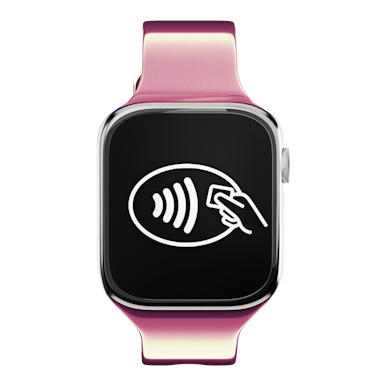
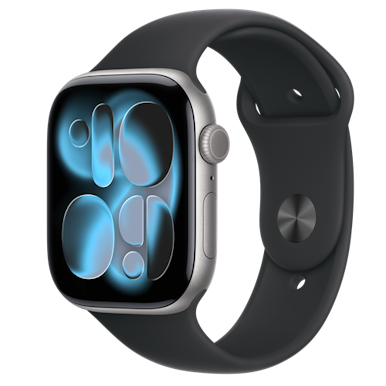
One of the best-known and widely used ways to pay with your wrist, the Apple Watch Series 11 lets you add your cards to Apple Pay and tap to pay almost anywhere that takes contactless.
-
If you’re already using an iPhone, setup is straightforward - your wallet just follows you onto your wrist. On top of payments, you get fitness tracking, notifications, thousands of apps, and all the usual Apple Watch features.
For a lot of people, it’s the easiest entry point into wearable payments because nothing really changes in how they bank or pay day to day.
From $399 (depending on size and connectivity).
7. Samsung Galaxy Watch 8
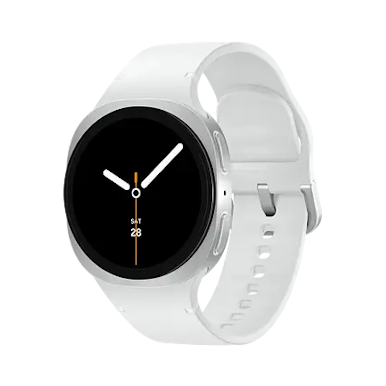
Samsung’s flagship smartwatch is another solid way to pay with your wrist if you’re on Android. Galaxy Watch 8 uses Samsung Wallet, so you can store your cards and tap to pay anywhere contactless is accepted - just press and hold the back key while holding the watch near the reader.
-
Once it’s set up, you don’t need your phone on you to pay, and you can choose between the regular Watch 8 and the more traditional‑looking Watch 8 Classic.
Beyond payments, you get Samsung’s usual health tracking, notifications, and fantastic integration with Galaxy phones, making it a good fit for Samsung users.
$349.99+ (Watch 8) / $379.99+ (Watch 8 Classic), depending on size and LTE.

8. Walletmor payment implant
-
Walletmor takes NFC wearable technology a step further with an NFC chip implanted under the skin of your hand or forearm.
Once it’s in place, it links to an EU-based iCard digital wallet, which you set up, top up, and then use by holding your hand near a contactless terminal.
Inside the implant is a passive NFC chip with an antenna and a biocompatible casing designed to survive inside the body while still talking to POS terminals at very short range.
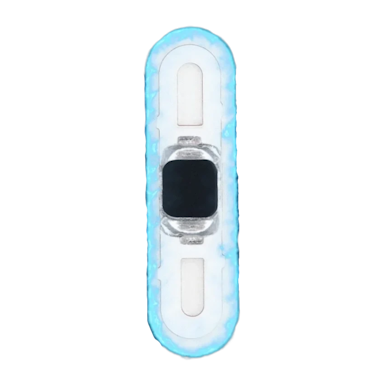

There’s no battery and nothing to charge (it’s passive and only wakes up when it’s close to a reader), but you do need a specialist clinic to install it.
Approx. $249 to $299 including hardware, plus a separate fee for the NFC “installation.”
9. CAP2PAY
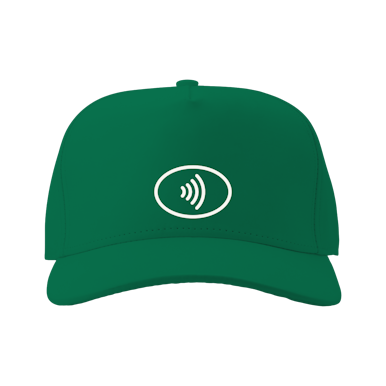
Another entry from LAKS Pay, CAP2PAY hides a removable NFC payment chip in the brim of a cotton cap and includes a matching SILI bracelet, so you can move the chip between hat and wristband.
-
The chip works like a contact less bank card once you’ve connected it via the LAKS Pay app, while the cap requires no charging and is waterproof to 100 meters - so you don’t have to worry about rain or sweat.
The obvious practical question, “Do you hold your head to the reader?” is a fair one.
It does work, though, and the price is low enough that it's more a novelty than a commitment.
$80.

10. TAP2 NFC payment rings
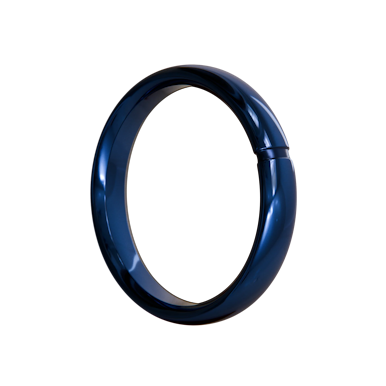
TAP2 makes NFC payment rings that work like a bank card on your finger. You link it to your Visa or Mastercard through the TAP2 platform, and it becomes a contactless ring you can tap anywhere contactless payments are accepted.
-
These waterproof NFC rings are made from scratch‑resistant ceramic or aerospace-grade titanium and come in different finishes like titanium blue or brushed black, so they feel closer to jewelry than tech.
It’s a simple take on wearable payments - something you wear once and just leave on.
Around $75, depending on finish and size.

But is it safe?
-
It's an obvious question, and it's a fair one. Paying with a ring or a watch feels less deliberate than tapping a card - so what's stopping someone else from doing it for you?
The short answer is that the same protections that secure contactless cards and mobile payments also apply to wearable payment devices, chiefly tokenization.
Tokenization means your actual card number is never transmitted - a one-time token does the job instead, meaning intercepted data is worthless to anyone who gets hold of it.
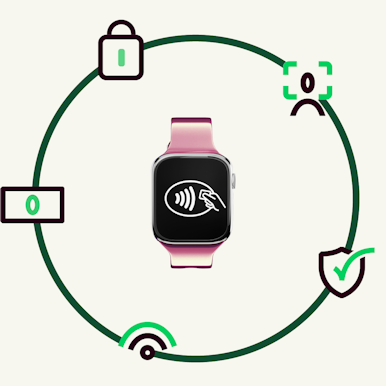

On devices with biometric authentication, your fingerprint or wrist detection acts as an additional layer before any transaction goes through.
The form factor is new - the trust framework isn't.
Where wearable payments go next
Wearable payment devices are quickly becoming the default way to tap and pay. Whether it is an NFC payment ring, a future Apple Pay ring, or a payment watch, the hardware fades into the background, and paying becomes second nature.
As contactless payment systems continue to expand across new form factors, more everyday transactions will move to rings, clothing, and other NFC wearables.
You probably won’t notice each new device arrive, but you will notice when you suddenly realize you haven’t pulled out your physical card in weeks.
For payment providers, that raises a practical question: how do you orchestrate all of those in‑person payment methods without adding more complexity to your stack? If you’re asking the same thing, get in touch with our team to explore a more unified way to handle in-person payments.
Interested in reading more around this subject? Here are some useful articles…