
If a phone can take a card payment, why pay for a full EPOS? Because the moment a sale needs to update stock or reach the kitchen, the phone needs a till behind it. Orchestration lets ISVs, PSPs and acquirers connect the two through one integration, with room to add more options as merchants grow.
Key Insights
- EPOS (electronic point of sale) combines orders, payments, stock and reporting in one system.
- SoftPOS turns a phone into a card reader, but it only takes contactless payments and isn’t built to run stock or service workflows.
- EPOS earns its place with large catalogs, multiple sites, table service or back-office integrations.
- Payment-only options suit simple sales, with SmartPOS and card terminals covering the gaps.
- Orchestration lets ISVs, PSPs and acquirers connect every option through one integration.
Don't have time to read more now? Sign up to our newsletter to get the latest insights directly in your inbox.
It’s 8pm on a Friday in a busy city-center bar, and the place is packed…
Behind the bar, staff ring up rounds on a touchscreen till that knows every open tab and which table ordered what. Out on the patio, a member of staff takes a contactless payment on a phone.
To the customer, both payments feel the same.
So, if a phone can take a card payment, why pay for a full EPOS system?
Answering it starts with what an EPOS system is, and what it does that a phone on its own can't. For an ISV, that answer shapes how their product evolves.
What is EPOS and what does it do?
EPOS stands for electronic point of sale. It’s the combination of hardware and software a business uses to record sales, take payments and keep track of what it sells. In practice, an EPOS system is the till of a modern shop, bar or restaurant, plus everything connected to it behind the scenes.
The term is most common in the UK and Ireland. In the US, the same systems are usually called POS systems. A related term, EFTPOS, stands for electronic funds transfer at point of sale. It describes the card payment step itself, and in Australia it is also the name of the domestic debit network.
-
So, what does an EPOS system do?
An EPOS system brings four jobs together in one hub:
- Till: staff build orders, apply discounts and manage refunds.
- Payments: the till sends the amount to a connected card terminal, so nothing is keyed in twice.
- Inventory: every sale updates stock levels, and POS inventory management can trigger reorders or transfers between sites.
- Reporting: sales, staff and product data collect in one place and feed accounting and other back-office systems.
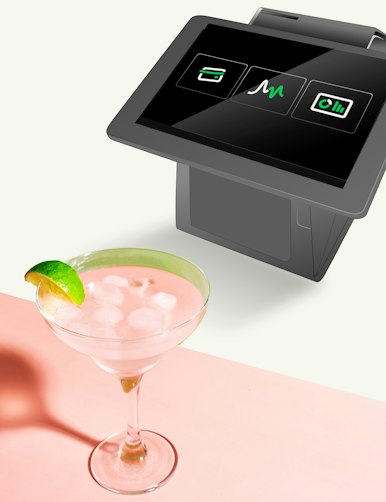

The software ties these jobs together, and it is usually where an ISV adds most of its value. For the business case behind each job, see the key advantages of EPOS for ISOs, ISVs and their merchants.
What’s the difference between POS and EPOS?
In everyday use, there is very little difference between POS and EPOS. POS originally covered any till, including a mechanical cash register, and EPOS showed that the system was electronic. Today almost every POS is electronic, so the terms have largely merged.
The more useful distinction for partners is between a full EPOS setup, which runs the business, and a payment-only option, which takes the money. SoftPOS, which turns a phone into a card reader, is the lightest of those payment-only options.
Where SoftPOS fits in all of this
SoftPOS lets a merchant accept contactless card and wallet payments on an NFC-enabled phone or tablet, using an app instead of a separate card reader. It doesn’t need any dedicated hardware, and it puts payment acceptance on devices staff already carry. For a comparison with mobile card readers, see SoftPOS vs mPOS.
But, SoftPOS also has its limits. It only accepts contactless payments, so customers can’t insert a chip card. PIN entry on a phone screen depends on the approvals in each market, and on its own, a payment app has no catalog, stock control or service workflow. Together, these limitations make a good case for EPOS…
When and where EPOS still earns its place
A full EPOS setup is worth its cost when the business depends on more than taking payment. It’s easier to understand where EPOS best earns its place when put in context, so here are four common situations…

Complex catalogs
A home and garden retailer may sell thousands of products in different sizes and colors, with prices that change by season. A payment app can record a total, but it can’t know which item sold. A retail point of sale system keeps every item, price and promotion tied to the payment.

Multi-site stock
A fashion chain with ten stores needs to see stock in other branches and apply a price change everywhere at once. That needs one central record that every till reads from and writes to.

Service workflows
A restaurant takes an order, sends it to the kitchen, keeps it open while diners add desserts, then splits the bill four ways. EPOS systems for restaurants, pubs, and bars are built around table plans, tabs and kitchen tickets.

Back-office integrations
Larger merchants connect their tills to accounting, payroll and loyalty systems. EPOS is where that sales data is created, and the ISV that supplies it often owns those integrations.
When payment-only options are enough
A payment-only option works when the merchant only needs to take a payment for a simple order, such as a market stall or a delivery driver collecting payment at the door. In those cases, the limits of SoftPOS rarely come up, because most payments are contactless and there is no stock or kitchen to update.
More often, SoftPOS works best alongside EPOS. A shop can use phones to shorten checkout lines, or a restaurant can take payment at the table, while the order and stock data stay in the EPOS.
Three other options cover the remaining gaps. SmartPOS is a card terminal, usually Android-based, that runs apps, so the EPOS app and the payment sit on the same handheld device. It suits staff who need EPOS features and chip and PIN away from the till, such as a server settling a large bill at the table.
Countertop and portable card terminals suit chip and PIN payments, larger amounts and high volumes. Unattended payment solutions handle self-service, such as parking, EV charging and vending.
EPOS vs SoftPOS vs other in-person options
ISVs, PSPs and acquirers can use these questions to decide which option, or mix, fits each merchant.

Question about the merchant
Do they sell many products, sizes or variants?
Does stock or pricing need to stay in sync across sites?
Do orders pass through a kitchen or table service?
Do sales need to feed accounting or loyalty systems?
Is selling occasional or mobile, with simple orders?
Do they need extra payment points at busy times?
Do customers often insert chip cards or pay larger amounts?
Will customers pay without staff present?
If yes, lean toward…
EPOS
EPOS
EPOS
EPOS
SoftPOS
SoftPOS alongside EPOS
Card terminal
Unattended terminal or kiosk
Most growing merchants answer yes to questions in more than one column. That makes the way these options connect as important as which ones are chosen.
How orchestration connects EPOS, SoftPOS and other in-person payments
When each option is added separately, partners end up with a tangle of systems. The EPOS connects to one terminal provider and acquirer, SoftPOS arrives through a different app, and unattended devices bring a third setup. Each needs its own certification and support, and the merchant’s payment data is split across all of them.
An in-person payment orchestration layer sits between those acceptance points and the acquirers behind them. The ISV integrates once, and every till, terminal, SoftPOS device and kiosk connects through the same platform, with transactions arriving in one reporting view. Partners can add SoftPOS to an existing EPOS estate, or route payments to a different acquirer, without replacing hardware or rebuilding the integration.
“Having the ability to move your card acquiring process from one acquirer to another without changing your hardware puts a lot of power back into merchants’ hands.”
Victor Padee, CRO, Aevi
That flexibility matters most as merchants change. A single café might start with one till, open a second site, then begin selling at events. With orchestration, each step adds an acceptance point to the same estate, and the EPOS for cafés stays at the center of the business.
Questions to ask before choosing an in-person setup
For PSPs, ISVs and acquirers, these questions are a good starting point:
- Which of your merchants depend on EPOS workflows, and which only need to take payment?
- Can you add SoftPOS to an existing EPOS estate without a separate integration and acquirer?
- If a merchant changes acquirer, does their hardware have to change too?
Back at the bar
For the bar, the answer to the opening question is clear. The till stays behind the bar, because it runs the tabs and the kitchen. The phone on the patio earns its place too, as long as each payment lands on the right tab. Connected through one platform, the two work as a single system, and the customer never notices the difference.
To see how this works across mixed estates, explore Aevi's in-person EPOS solutions.
Interested in reading more? Here are some useful articles:


